- Written by: UnitedPreSchool
- September 15, 2026
- Categories: Blog
- Tags: , benefits of preschool education, best preschool in kathmandu, kathmandu best preschool, united preschool
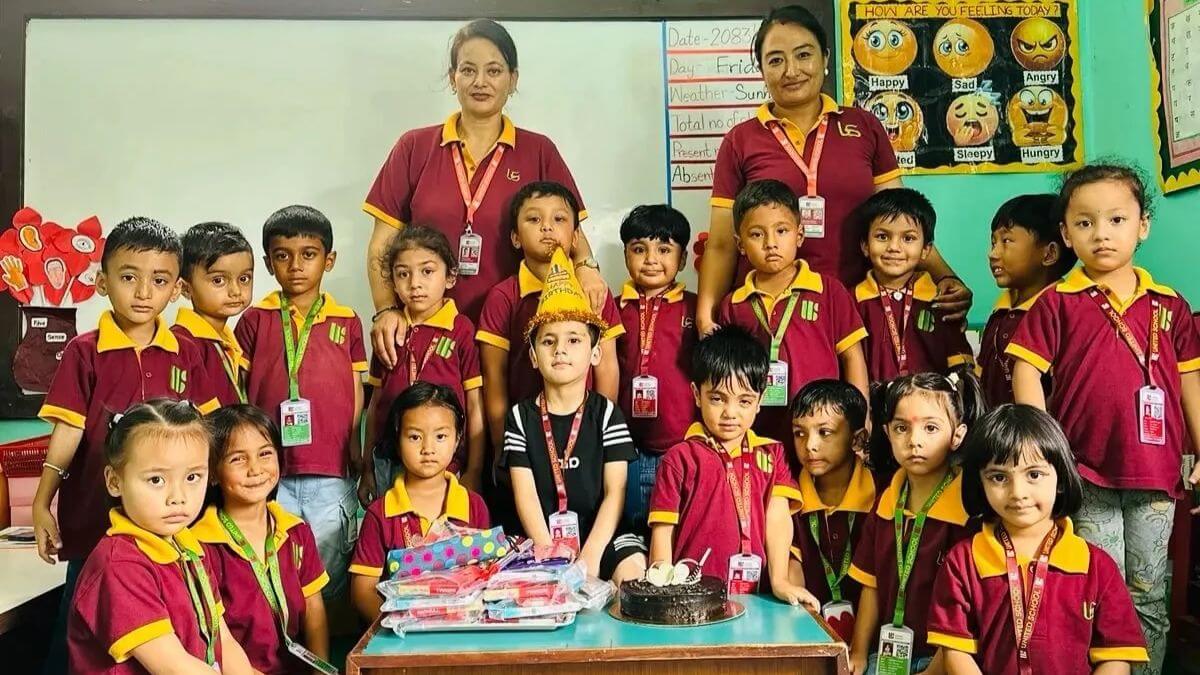
Your 3-year-old refuses to share a crayon with a cousin, brother, or sister. After 2 months of preschool enrollment, that same kid is handing over the crayon without being asked. That small shift/changes in the child says a lot about what preschool actually does.
Preschool education builds social skills, language, confidence, and school readiness, mostly through play rather than lessons. Interest in early childhood education Nepal-wide has grown a lot over the past decade, and parents in Kathmandu and Lalitpur are asking the same question: is it really worth it?
Here is the list of benefits of preschool education once you get past the brochure language.
What Preschool Education Really Means
It can be considered a child’s first non-classroom classroom, which is active from about 18 months to 6 years and is divided into stages called playgroup, nursery, and kindergarten (Junior KG and Senior KG). There are no tests in preschool education, and there are no grades. All there is are songs, blocks, reading books, and extracurricular activities. This is all about focusing on children’s physical and mental growth.
Not sure if your child is ready for this step at all? Is Preschool Really Necessary for My Child? answers that question directly.
10 Benefits of Preschool Education for Your Child
Some of these benefits show up in weeks. Others take the full year to settle in. Either way, they build on each other.
1. Builds Strong Social Skills
Preschool is where most children will be exposed to their “first peer group” away from the familiar environment of home. No longer is there a parent who helps solve every issue with toy sharing. Children learn how to share, take turns, and handle minor conflicts by themselves while a teacher watches from a distance but does not interfere. This type of socialization in preschool definitely cannot be replicated with one or two adults at home.
2. Boosts Brain Development in the Early Years
This is the element that most parents fail to realize. The brain develops fastest between ages 0 to 6 compared to any other time in an individual’s lifetime. Activities such as singing, building blocks, finger painting, and even having messy snacks are all part of this development period. Specialists who study cognitive development during childhood call this period a “use it or lose it” period. After closing, the period will not reopen.
3. Improves Communication and Language
Talking to a teacher and a room full of classmates all day is a different exercise than chatting with mom or dad at home. Kids pick up new words fast under that kind of daily pressure to communicate. Ask any preschool teacher and they’ll tell you: most kids go from short phrases to full sentences within a term or two.
4. Builds Confidence and Independence
Packing away toys. Decision-making in the selection of two activities. Raising a hand to answer a question, whether or not the answer is accurate. All of this sounds like nothing much if it’s taken individually. Add up a lot of these little moments and you have a kid who knows what to do, rather than what to do next, and without relying on anyone else’s.
5. Teaches Emotional Regulation
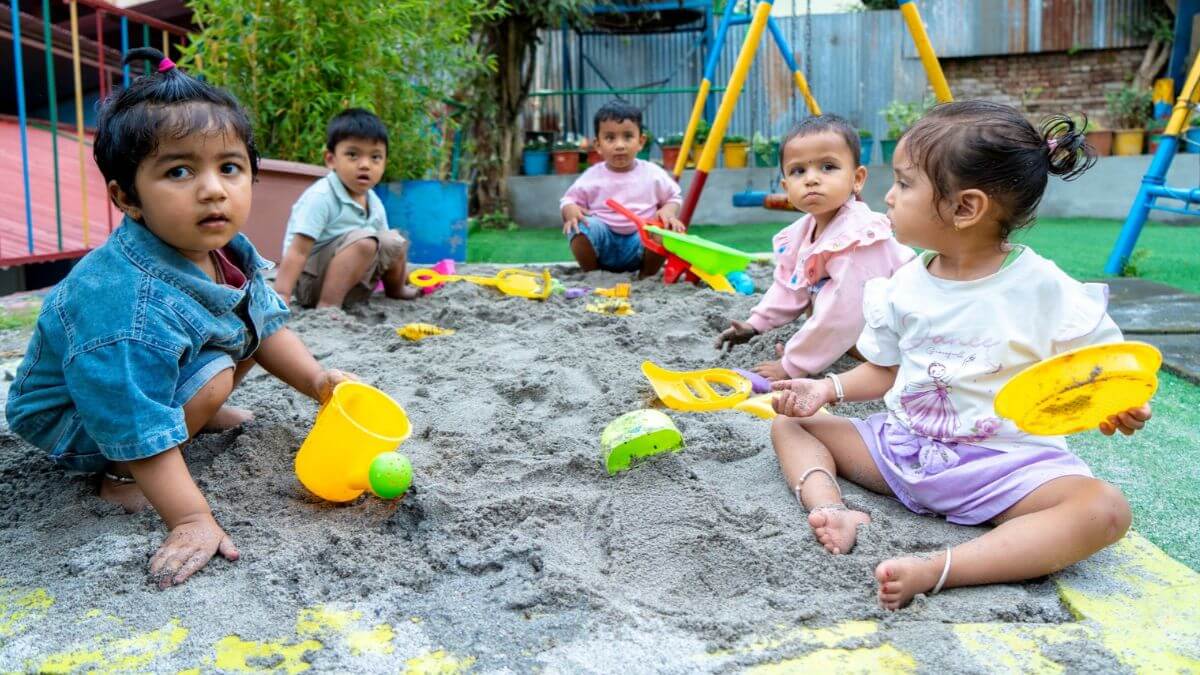
Preschool is essentially a day filled with little frustrations such as taking turns on the slide, sharing a puzzle, leaving without any meltdown. Teachers gently and without rescuing, take children on a journey through these moments and over them and over them again. Gradually, children begin to label their emotions rather than just experiencing them.
6. Prepares Kids for School Readiness
In preschool everything is seen as games: letters, numbers, shapes, colors. When students sit still for class or for group work, it is not a surprise when formal school begins. It’s just Tuesday. Which is just a familiarity, in a nutshell, what school readiness skills are all about.
7. Encourages Creativity Through Play
Art corners, music time, make believe kitchens and dress up boxes. None of it is “the right way” to do it; it’s just that. Children are given the space to think creatively, without needing to get it ‘right’, and play, much like the time they spend at the table with a ball, quietly contributes to their problem-solving skills that will stay with them long after preschool.
8. Builds Routine and Discipline
Every day, we start with circle time, play time, snack time, and story time. Children quickly learn and begin to anticipate what is coming next, without having to be reminded. This sense of rhythm is carried over into primary school and becomes increasingly challenging.
9. Supports Working Parents
In a working couple’s home, preschool is more than a place where kids learn to read and write; it’s a place where they learn to brown bag their lunch. When grandparents aren’t there to look after a child, it’s a safe and structured environment that the child can spend a day in. This is one of the more useful preschool advantages for working parents, particularly when extended family support isn’t always nearby in the city.
10. Sets the Foundation for Lifelong Learning
Curiosity, listening, attempting to do something again when it does not go as desired. These habits don’t go away after kindergarten. They go with a child to each classroom thereafter. When it comes to learning, preschool is often the first place a child discovers that learning can be fun, not something adults make you do!
Learn about United Preschool Qualified Preschool Teachers, a proud gems of US Preschool in lalitpur.
What the Data Says About Early Childhood Education Nepal-Wide
The government and UNICEF-supported data show that the pre-primary enrolment rate has risen from 12% in 2000 to 86 % in 2017 AD AD in Nepal. It is not a small step. It is a real change in the perception of Nepalese families of early learning from an extra activity to a first step.
Best Age to Start Preschool
The best time to join a preschool program is somewhere between 18 months to 3 years old. The child becomes very curious, learns new words rapidly, and is also eager to be among others other than his or her parents.
Why United Preschool Delivers These Benefits
Looking for preschool Lalitur in Nepal? Confidence, school readiness, all of it, that’s what United Preschool School in Satdobato is based on. Over the years countless families have trusted this campus as their choice of preschool in Satdobato. The trained teachers here develop these benefits into a daily routine instead of a one-off activity. Look at the program overview to determine if this is appropriate for your child’s age.
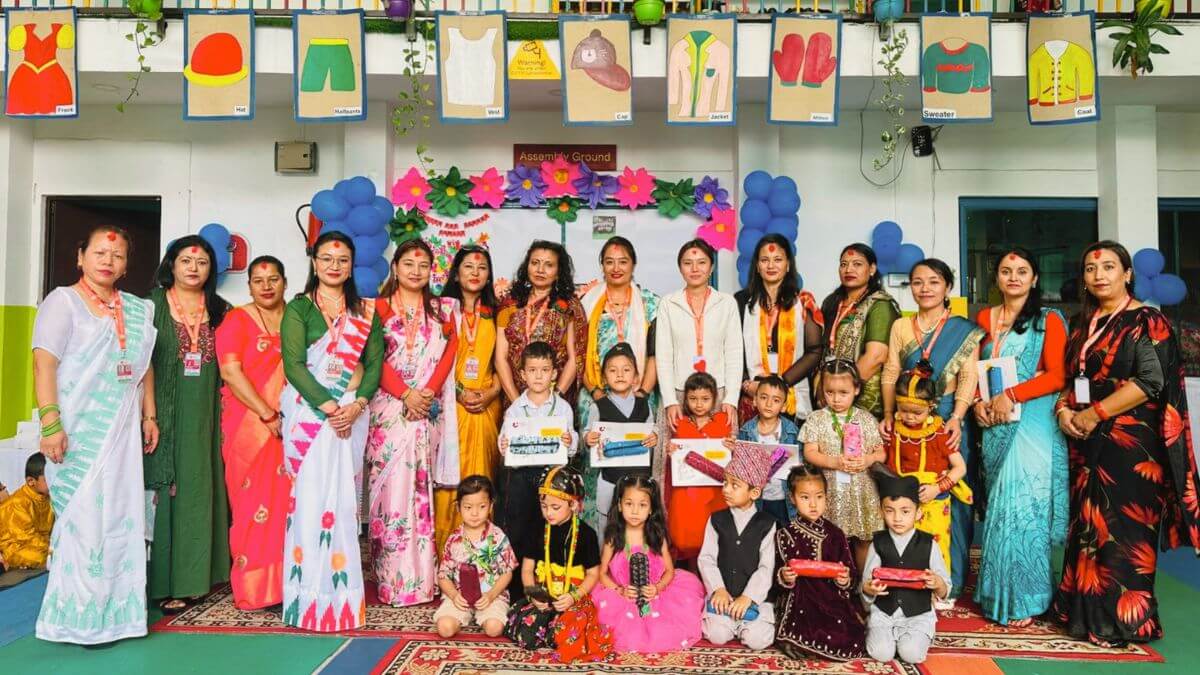
United Preschool in Sadhobato is open for admission in Playgroup, Nursery, Junior KG, and Senior KG. Contact us now or apply directly via website!!
Final Thoughts
The benefits of preschool education go well past knowing the alphabet early. It’s really about how a child learns to connect with others, bounce back from setbacks, and stay curious. If that sounds like something you want for your child, apply for admission at United Preschool in Satdobato, Lalitpur.
FAQs
What are the benefits of preschool education?
Social, language, confidence, emotion management, and school readiness skills developed primarily through play.
Why is early childhood education important?
Because a child’s brain develops faster between birth and age six than at any later point. Miss that window and you don’t get it back.
Does preschool help with school readiness?
Yes, routines, group learning, and early academic concepts get introduced with none of the pressure, so kids walk into formal school with less anxiety and more confidence.
What is the best age to start preschool?
Most children are ready somewhere between 18 months and 3 years old, though every child moves at their own pace.
Is preschool better than home learning?
It depends on which one is your top priority. Parents in Nepal face this dilemma all the time. At home, your kid will receive personalized attention. In pre-school, they gain the added value of social interaction and structure.